


10 Days

Easy

3,865m

Nepal

2-16

3 star hotel, Lodge

Jeep

B, L, D
Explore more facts about the trip
US$ 1199
Langtang Valley trek is not just a trip or a hike, it’s breaking out of the regular box of the typical trekking journey to Everest Base Camp and the Annapurna region. This off-road adventure will help you experience reality through the authentic prism of diverse cultures, terrain, and Himalayas.
The Langtang Valley, right up to the Langtang Glacier itself, will take you 61.8 km northward from Kathmandu. It is embraced all around by the looming peaks of the Mountains of Langtang. In the north, looms the Langtang Lirung (7246 m), in south Jugal Himal with the unique vision of the Gosakunda Lake. As a result, our Langtang Valley trek promises an abundance of sublime mountain scenery.
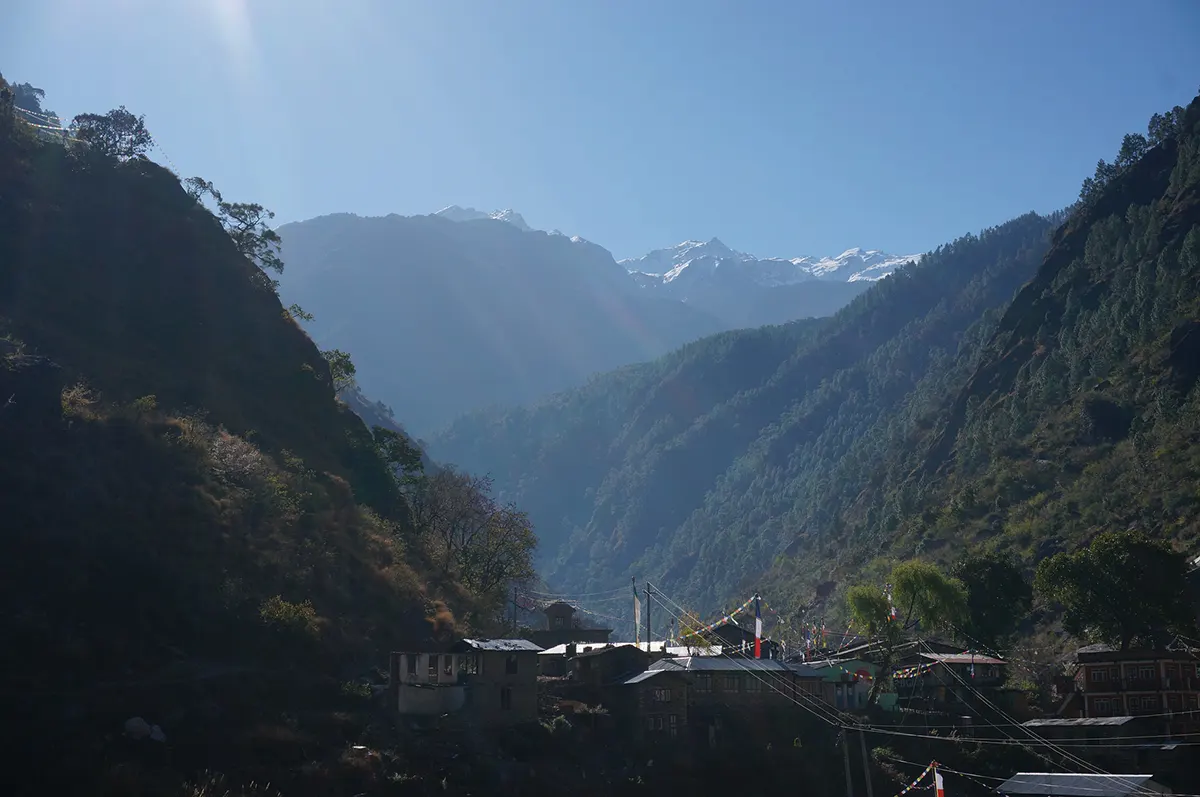
Our 10-day-long Langtang Valley trek also has a very beautiful diversity of nature. The tropical feel with blooming giant rhododendrons, birds, monkeys, green trees, mossy rocks, and cicadas.
The brisk winds, snow-capped peaks, mesmerizing glaciers on mountain tops, thunder, and snowfalls. And, above all, the closeness and untouchedness of nature and the enormous majesty of the mountains.
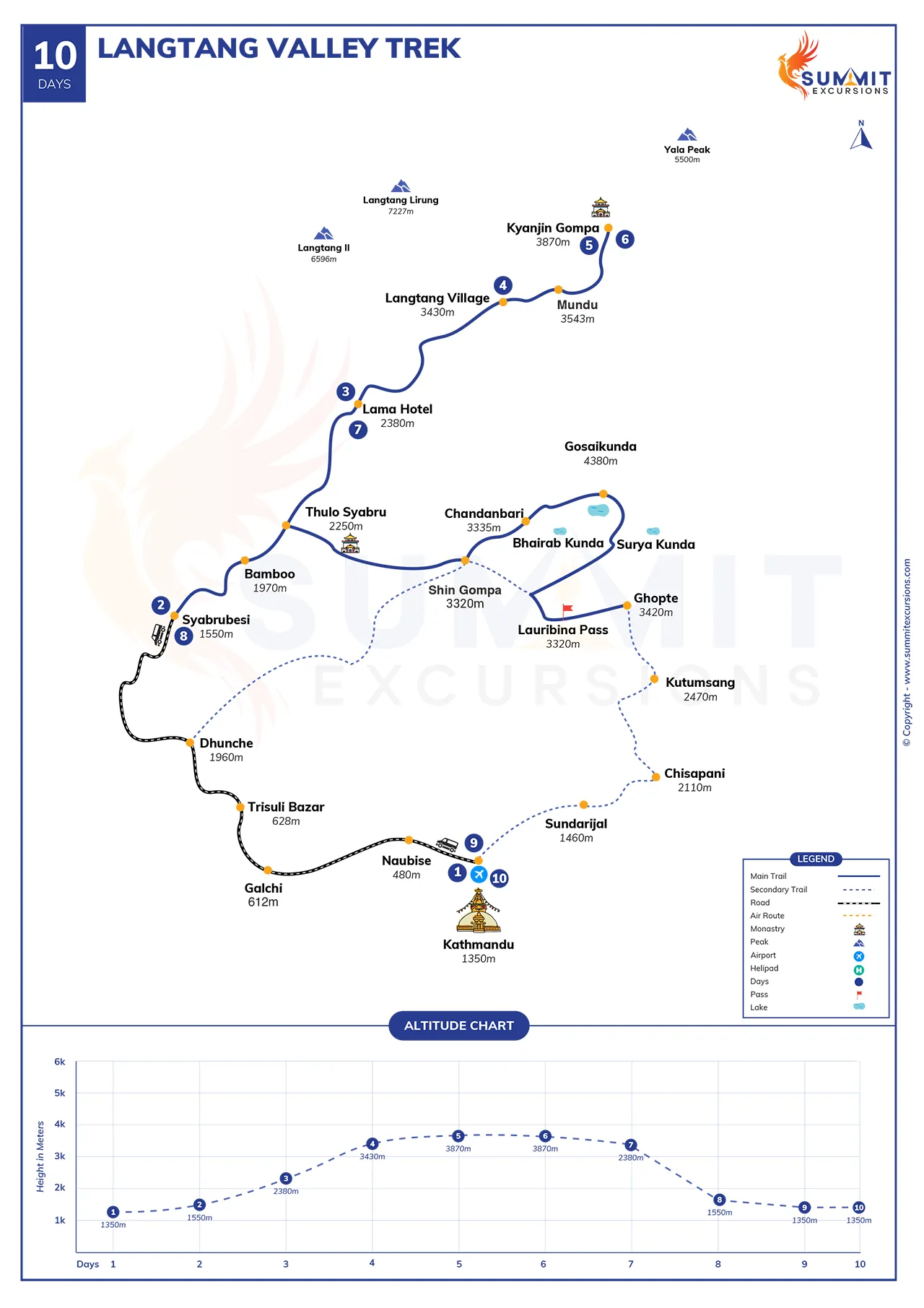
Our Langtang Valley trek gets under way with a 8 to 9-hour road journey from Kathmandu to Syabru Besi- the last village where the motorable road reaches. Then, the Langtang Valley will be reached the next day after passing the Tamang Village of Lama Hotel.
In these lower parts, we will find Tamangs- previous traders and now the pastoralists and farmers. As we ascend to higher levels in our Langtang Valley trek, we will enter the area where the Sherpa live who will pass by us smiling.
Passing by the pastures of Yaks, shady jungles, and improvised bridges, Kyanjin Gompa will be reached at 3830 m immersed in the continuous rhythm of Buddhist chants.
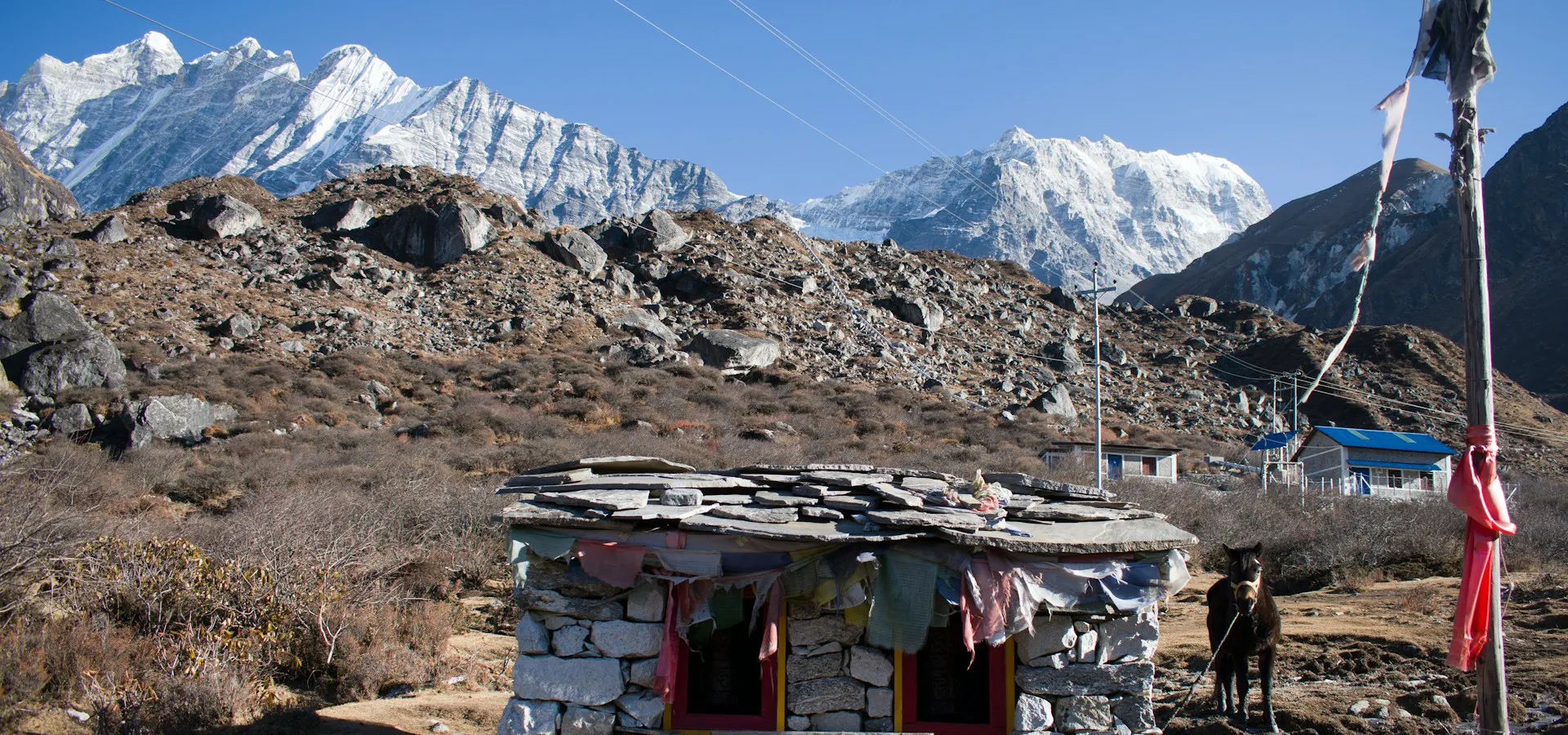
The sun-bathed landscape with the Naya Kang (5,844 m), Dorje Lhakpa (6,430 m), Tsergo Ri (5,033 m), Yala Peak (5,500 m), Ganja La (5,160 m), Langtang Lirung, and Langshisa Ri (6,427 m) create a peace that doesn’t exist in the real world.
The majestic Tsergo Ri, towering at 5033 m, and the stunning Kyanjin Ri, reaching 4773 m, both beckon us from the village, inviting us to explore their heights.
Here, in our Langtang Valley trek, we offer you the choice of which path to take or not to take. Then our return will follow the same circular trail we took earlier.
Overall, our Langtang Valley trek is a quick and easy expedition that is achievable for all, containing all the components you hope to find in a trekking adventure in Nepal.
Namaste! We like to extend a warm welcome to you in Kathmandu, the enchanting capital of Nepal. One of our competent team will be at TIA (Tribhuvan International Airport) to escort you to your hotel in the city.
The lively thirty-minute private drive will offer you splendid insights into the city, you will understand why it is often referred to as the city of temples.
We will await the arrival of all our group members participating in our Langtang Valley trek, after which our guide will organize a short meeting for all participants.
Then, you can get acquainted, eat, rest, and explore the city. We will also check the readiness of the equipment for the hike.


In the morning, we will go by private four-wheel to the mountains to the village of Syabru Besi. Once we pass Kalanki and Thankot, we are out of the city and the vast Trishuli Highway will be traveled to reach the bustling market of Trishuli.
After we grab our lunch and snacks, our journey will move on through Nuwakot. Then the wide Pasang Lhamu Rajmarga (Highway) with its twists and bends will guide us to Rani Pauwa, and then to Dhunche.
The National Park army checkpoint will ask for our permits, then our road will take us down to New Syabru Besi above the Bhote Koshi River. Next, an expansive bridge will guide us to the Old Syabru Besi, squeezed on three sides by the mountains of Ganesh, Manaslu, and Annapurna.


Today is a new day that marks the beginning of our trekking. This is when we will grab our feet and head forward towards Lama Hotel. We journey across the two long hanging bridges spanning over the Bhote Koshi.
Shortly, the small yet charming Dhomen (1620 m) salutes us as we walk alongside the mountain river of Langmoche/Langtang signifying we have now stepped into the land of Langtang Valley. The shady mountain jungle of Langtang will then usher us to the Bamboo lodge.
Now, the last two-hour stretch will be quite strenuous as we get ready to climb the long steep stairs of stone. A Rimche town will open its arms which will then direct us to the Lama Hotel aka Chantang.
The mountain river Langtang Khola with its amazingly colored water would hide among the thickets, then reappear in the gorges, accompanying us on our way from time to time. The Langtang forest will first take us to the military checkpost at Ghumanchowk.
After our permits are inspected, our course runs through the giant rhododendron forests towards Chunama. Ahead in the horizon, the sharp heads of the Himalayan mountains will shimmer in white. Among them, the main attraction is Mount Langtang Lirung (7225 m) of a regular cone-shaped form.
Now the climbing track, quite demanding, will take us among the juniper, tiny irises, and other flowers towards Ghora Tabela (3000 m). Following this, we will walk down to Thangshyap and Ghumba before making another ascent to reach Langtang Village traversing Chyamki.
We will continue our journey upward to Mundu Village constantly followed by the careful eyes of Ganesh, Naya Kanga, Dorje Lakpa, and Langtang Lirung.
The bushed and long weeds begin to appear, and yaks seem to graze peacefully as we progress to Singdun and Yemphu villages. The Kyanjin Gompa is not far, where is literally feel we are soaring in the sky.
Other beautiful towering summits of Langshisha Ri, Kinsung, Gangchempo, Chorakri Ri, and Kyanjin Ri will begin to show their ice-glimmered heads.
Today, we will get acquainted with the highlanders of the Kyanjin Gompa and the mountains. But first, we will rise to the ghostly 5033 m high Tsergor Ri – a small mountain peak that does not require special equipment and serious training favorable for those who love regular mountain tourism.
We will move to the east of the village, towards the massive walls of Langshisha Kharka. Then a challenging upward hike to Yala Kharka will be tackled after which a brief climb over the rigged terrain will take us to the head of the Tsergo Ri.
The ghostly white appearance of Langtang Lirung, Gyangchempo, Naya Khang, Langtang Ri, and Yala is very fascinating.
You can also consider climbing Kyanjin Ri, which rises to 4,773 meters. It is less towering than Tsergo Ri, the ascent is easier, and the panoramic vistas are equally magnificent.
Along with Langtang Lirung, and its glacier, you will also see the Changbu, Yala, Yubra, and Tsergo Ri from this Viewpoint.
After the time in the mountains, it is now time to be with the people and mingle with their small chattering with a cup of tea.
We will say goodbye to the lovely Kyanjin Gompa and set off on our return journey. We will lose altitude today, so the journey will be much easier.
Without rushing, we go down through the similar sightings of Mundu, Ghumba, Thangshyap, Ghoratabela, and Gumanchok to finally rest our feet at Lama Hotel.
The downward transition from Lama Hotel to Syabru Besi will be pretty simple and fast. On the way back down, we will come across the already-known settlements of Rimche, and Pairo, and again the Langtang Khola reappears through the gorges.
The forward track leads us back into the Valley of Bhote Koshi where we will once again walk over the hanging steel bridge to advance to Syabru Besi.
Our private transport will meet us in the morning to drive us back along the winding hilly road to Kathmandu. Dhunche, Rani Pauwa, and Trishuli Mrket once again bestow us their sights as we drive past them.
Slowly, the bustling road of Kathmandu reappears as we approach Thankot and Kalanki. After reaching our cozy room, and relieving our fatigue, we will take some time to wander around Thamel.
In the evening, a delightful time will be spent with a team who made this adventure possible. A farewell dinner and festive evening will be a wonderful ending to our delightful Langtang Valley Trek.
On your last day in Kathmandu, make the most of your time with some final souvenir shopping. Our team will be on hand to give you a warm send-off, guide you to Tribhuvan International Airport, and ensure your departure is as comfortable as possible.
If our standard itinerary doesn't fully meet your needs, we are happy to tailor it to your specific preferences and requirements.
A private trip offers complete flexibility, personalized itineraries, and tailored experiences. You enjoy privacy, exclusive attention from guides, and the freedom to travel at your own pace, making the journey more intimate and customized to your preferences.
Joining a group tour offers cost savings, added safety, and the chance to meet new people. It provides expert guidance, organized logistics, and a more enriching experience through shared insights and camaraderie.
The Langtang Valley, its villages, and its forests are under the temperate subtropical climate with monsoon influence. The highest temperature is observed in June with heat of 28°C while the coldest temperature falls in January with 16°C.
The average temperature revolves around 18.5°C with total rainfall per year reaching 555.9 mm. The driest month around the year is January when the rainfall is only 9.4 mm while August receives the most rain up to 123.7 mm.
Since for walking for longer hours, the driest periods offer the best conditions. Therefore, we recommend you to plan your Langtang Valley trek during the spring or autumn months for an optimal experience.
The Langtang forests in March, April, and May, seem to be on fire as the multi-colored rhododendrons and wildflowers paint the whole landscape with their amazing texture. However, the air is still permeated with haze most of the time obstructing the grandest view.
In September, October, and November, the mountain forest particularly brightens up with the jumping of langurs from tree to tree, and the continuous bird singing. The air will be filled with the intoxicating aroma of herbs, firs, and wildflowers, and more transparent, and clearest views of the white heads of the snowy peaks.
The 61.8 km circular trek through Langtang Valley is a remarkable adventure that displays a unique combination of nature and terrain. Yes, there are mountains, there are rich dense forests, and the very own rhododendrons.
There are also waterfalls, pastures, and mountain rivers playing hide and seek appearing and disappearing through the forests and gorges. Slowly, the tall brown bushes replace the forests and stony tracks appear taking us to some incredible heights.
This breathtakingly stunning journey begins in Syabru Besi, 122 km farther from Kathmandu, and guides us to the Rasuwa district near the China border. Just 60.9 km from Syabru Besi lies the enchanting Langtang Village.
We will live for two days at Kyanjin Gompa, where the impressive altitude of 3,830 meters allows us to feel like we can almost touch the sky. If we decide to ascend either Kyanjin Ri at 4,700 meters or Tsergo Ri at 5,033 meters, these peaks will represent the maximum heights we will attain during our short Langtang Valley Trek.
The daily distances we will cover are quite manageable, ranging from just 10 to 12 km.
The Langtang Valley trek is not a difficult journey, sitting comfortably at a medium level. The walking track climbs almost permanently, however, it does so slowly and with almost no steep slopes, always along the river. The walking route through the Langtang Valley therefore poses no threats whatsoever and it is a completely safe journey near Kathmandu.
The walking length is also short with the utmost elevation at Kyanjin Gompa less than 4000 m. The Langtang Valley trek is thus a favorable choice among travelers who intend to take the demanding journey toward the Annapurna, or Everest.
That being said, there is always some kind of challenge and risk associated with mountain trekking especially related to the altitude. The higher heights can also be the epicenter of the uncertain weather.
Additionally, we must not also overlook the length of our daily walks lasting between 5 to 6 hours, which take us through the undulating forest and the dry terrain, with icy patches along the way. It’s therefore essential for every participant to maintain good physical fitness to tackle this challenge.
The Langtang Valley trek does not entail previous experience or outstanding physical condition. A simple habit of walking and a bit of vigilance to prevent ankle injuries several days away from the last settlement are all that is needed. The risk of spraining an ankle in this region is significantly less than the chances of encountering a serious accident elsewhere.
In addition, our Langtang Valley trek also has a wiggle room when you can spend a day off at Kyanjin Gompa just walking around. It’s not mandatory to climb the summit of Tsergo Ri or Kyanjin Ri.
This makes our trip a family-friendly and welcoming journey for newcomers. It is also open for seniors enjoying their golden years. Just remember to consider the walking distances and the potential climate issues.
The primary challenge is the fast elevation increase with some days going beyond 500 meters. However, you can expect the same luxury as you get in other popular and developed treks in Nepal. There are lodges in every en route hamlet, there will be our guide walking side by side, and there will be of course porters.
A significant threat in our ten days long Langtang Valley trek is the possibility of altitude sickness. Here too, everyone has their weaknesses and there is no point in being the best in the gym on earth. Physical form and endurance don’t help, and neither does having previous experience at altitude.
The problem can appear after 3,000 meters, and the higher you go, the more likely you are to experience headaches, nausea, and dizziness. There are already medications, but the safest and most definitive option is to descend a minimum of 300 meters.
Often, symptoms will vanish on their own after a few hours as you adjust to the higher elevation. If they retain, its crucial you march back down, unless you are willing to give up the Langtang hike entirely.
If you notice that your symptoms are worsening instead of improving, such as experiencing vomiting, shortness of breath, or extreme fatigue, please notify our guide immediately and consider taking Diamox to alleviate these symptoms.
For headaches, stick to paracetamol, as Diamox is a diuretic and may not be suitable if you have any kidney issues or infections—consult a doctor in that case.
To lighten the altitude sickness risk, we have arranged a rest day at Kyanjin Gompa and will gradually increase our altitude during the trek. We kindly ask that you refrain from using sleeping pills, consuming alcohol, or smoking while on this adventure.
The Langtang Valley trek has a remarkable adaptability to blend numerous other trekking journeys. You can direct to Ganja La Pass, or take an easier Tamang Heritage trek, add the Gosaikunda Lake detour, or integrate the Pangsang Pass, connected to the Ruby Valley Trek.
One of the extraordinary opportunities presented by the Langtang Valley trek is the chance to conquer Yala Peak, rising to the imposing 5,500 meters. This adventure begins at Kyanjin Gompa, allowing you to proudly claim that you have crossed the 5,000-meter threshold in Nepal.
Langtang Valley trek is a journey for everyone, because of its manageable nature. Still, when you practically face the steep uphill walk, it can be a bit shock to you. Your muscles may scream with pain, you may gasp for breath.
Therefore, a little physical training session will not hurt. To begin with, make sure your leg muscles are trained. Do some extra walking or running at home. Climbing stairs works best, because that way you address exactly the right muscle groups. It makes your mountain hike easier and therefore even more fun.
Also, learn the art of ascent, which is unavoidable in the mountains. Walking uphill, especially when it gets steeper, is an assault on your stamina. Unless you shorten your stride and slow down your running pace, you will soon be deep in your breathing.
Make sure you keep breathing as calmly as possible by slowing down your pace and shortening your stride. The rule is that the steeper it gets, the shorter your stride.
If there is ascent, there will be descending as well which may seem easier but it can be just as hard as climbing. Therefore, during the descent, you can relieve the pain by taking short steps again and taking regular breaks.
If it is very steep downhill or the ground is loose, do not lean back, but keep your center of gravity above your feet. Then you will slide out less quickly.
The Langtang Valley trek is not without risks where well-trodden paths can turn into mountain trails which are not always well maintained. There can be loose stone, some landslide residue, and some slippery which can be risky even for experienced hikers.
If you accidentally slip or injured, then your travel insurance will cover the costs that have to be made. It will also cover the costs of tracking you down or transporting you to the hospital.
It is essential to ensure that your insurance policy includes coverage for extreme mountain trekking and climbing activities, particularly at altitudes of up to 5000 m. Additionally, verify that your policy provides protection against baggage loss, extended stays, theft, and travel delays.
This way, you will really relax and seek adventure in the mountains knowing for sure that your insurance is in order.
In our Langtang Valley trek, all your road journeys will take place in a private vehicle provided by us with a skilled professional driver starting and concluding on your first and last day in Kathmandu.
As soon as you land in TIA, a private transport will be ready to greet you, along with our driver and one of our team members who will guide you to your hotel. This same level of service will be available on your departure day. A cozy four-wheel drive will be at your disposal, for your travel between Kathmandu and Syabru Besi.
In terms of connectivity, the proximity to the Kathmandu Valley, and its lower altitude, the Langtang Valley has excellent mobile reception. You can easily connect using either NTC or NCELL SIM cards.
To obtain physical SIM cards, you will have to offer the passport photocopy with a photo. For the online activation of Ncell and NTC eSIMs, a scanned copy of your documents will be necessary. On the route, you can also make use of the 3G – 2G Internet through your mobile data.
There is also paid Wi-Fi in shelters along the route but the connection can be static. There is also electricity everywhere with suitable outlets in both the room and dining area, perfect for charging your phones, cameras, power banks, and batteries. An added expense will have to be incurred by for these services.
In Kathmandu, your accommodation will be in very comfortable 3-star hotels, in double apartments. During the trek you will sleep in Mountain Lodges without private bathrooms, sharing the room with one other person.
In some lodges you will need to share the room with more people, it will depend on the number of trekkers there will be at the Lodge. In some Lodges, it is possible to have a hot shower.
For Kathmandu, aside from breakfast, lunch and dinner are not included. This leaves everyone free to discover the city’s great little restaurant spots. Everyone orders the food individually.
During the trek all food is included; they will be done in the lodges of the villages that we will find on the way. Nepalese provide tourists with full hot food. In general, the food is quite tasty and reasonably varied. You decide what you will eat.
Breakfasts are accompanied by local specialties (pancakes, Tibetan bread, eggs, porridge, etc.). Lunch and dinner will be accompanied by Dal Vat, or Dumplings, Thukpa, Pizza, Pasta, etc.
However, bakery items, in addition to soda, cold beverages, and various other drinks, are not part of the inclusion.
The Langtang Valley trek traverses through the beautiful green and rich landscape and terrain of the stunning Langtang National Park which proudly stands as the first Himalayan National Park of the country founded in 1976.
To gain access to the park, we must therefore have the Langtang National Park permit, which can be acquired in Dhunche.
In addition, we also secure the TIMS ( Trekkers’ Information Management System Card) – an official card allows the concerned officials to monitor your location for the necessary evacuation.
Our guide will manage the permit acquisition during the trek.
The National Park of Langtang, the people, the landscape, the monasteries, and the chance to mountaineering are some of the strengths of our Langtang Valley trek.
It is not possible to view Everest from any area in the Langtang Valley.
After the tragic earthquake in 2015, the Nepal Government closed this route but now it has been reopened after the miraculous transformation over the years.
We do not have an age limit for our Langtang Valley trek as long as you are fit and free from serious medical issues.
Yes, the Langtang region experiences snowfall in December and January.


